
































- Kapodistrias is a serious historical drama that explores the life and vision of Ioannis Kapodistrias, the first Governor of the newer Greek state.
- The film portrays Kapodistrias as a principled statesman devoted to rebuilding Greece through institutions, education, and law rather than populism or spectacle.
- Central to the narrative is his belief in the continuity of Hellenism, linking ancient Greek ideals, Byzantine heritage, and modern statehood into a single civilisational identity.
- The story unfolds against the political instability and social fragmentation of post-Independence Greece, highlighting the immense challenges of nation-building.
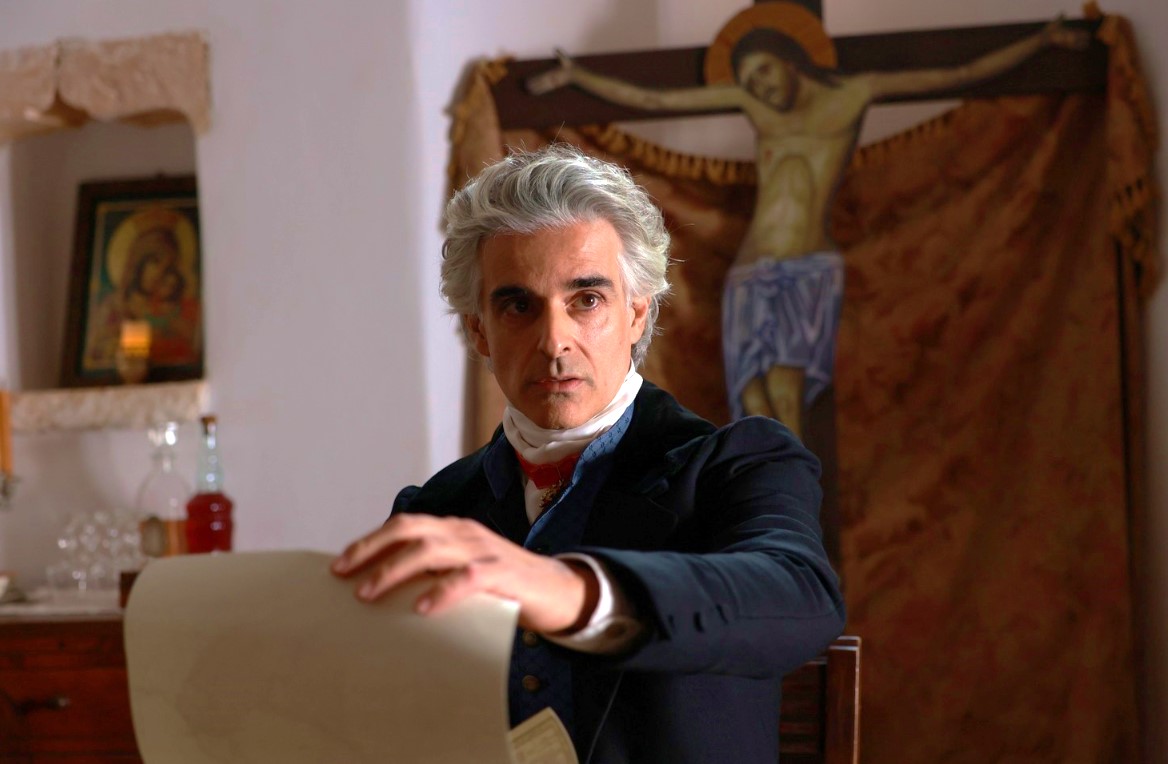
- Cinematography is restrained and atmospheric, using muted tones and composed frames to reflect the gravity and solitude of leadership.
- Rather than glorifying its subject, the film presents Kapodistrias as a complex, often isolated figure whose moral clarity placed him in conflict with entrenched interests.
- The film ultimately reflects on the cost of integrity in politics, culminating in a tragic ending that underscores the enduring tension between vision and power.
Kapodistrias movie FAQ
What historical period does the film Kapodistrias focus on?
The film focuses on the early years of the newer Greek state following the Greek War of Independence, a time when Greece was transitioning from revolution to organised governance in the early 19th century.
How historically accurate is the film Kapodistrias?
Kapodistrias aims for a high level of historical realism, portraying documented political events, ideological conflicts, and social conditions of post-independence Greece, while using limited dramatic compression for cinematic clarity.
Is the film Kapodistrias suitable for international audiences?
Yes. The film is designed to be accessible to international viewers, offering sufficient historical context through its narrative and visuals without requiring prior knowledge of Greek history.
How does the film portray the continuity of Hellenism?
The film presents Kapodistrias as a strong advocate of the continuity of Hellenism, linking ancient Greek ideals, Byzantine heritage, and modern Greek statehood through education, institutions, and governance.
What political challenges of early modern Greece are shown in the film?
The film highlights political fragmentation, local power struggles, foreign intervention, and resistance to central authority, all of which shaped the difficult formation of the newer Greek state.
Is Kapodistrias a political drama or a personal biography?
The film is primarily a political historical drama, while also offering a restrained personal portrait of Kapodistrias that emphasises moral responsibility, discipline, and the burden of leadership.
How does cinematography support the historical atmosphere of the film?
The cinematography uses muted colour palettes, composed framing, and natural lighting to reinforce the seriousness of the historical period and the gravity of nation-building.
Does the film address the opposition Kapodistrias faced?
Yes. The film explores the political, social, and ideological opposition to Kapodistrias’ reforms, showing how resistance to institutional change led to his isolation and eventual assassination.
How does this film compare to other Greek historical films?
Unlike romanticised historical epics, Kapodistrias belongs to a modern wave of Greek historical cinema that prioritises realism, political complexity, and ethical reflection.
Why is the story of Kapodistrias still relevant today?
Kapodistrias’ story remains relevant due to its focus on ethical leadership, institutional integrity, and the long-term challenges of nation-building, themes that continue to resonate in modern Greece and Europe.









Comments are closed